‘So, I say that we had better be without gold than without forests’ — John Evelyn in Rembering Our Forgotten Forests
I recently had the good fortune to meet US author and ecological activist Derrick Jensen, whose book Strangely Like War: The Global Assault on Forests (co-authored with George Draffan, 2004) had a big impact on me when I began the Hollywood Forest Story – the transformation of the Sitka Spruce plantation to a more biodiverse forest using new-to-Ireland Closer-to-Nature forestry management. It offered a powerful context for understanding the globalised colonial violence of industrial forestry and plantation systems that I’m familiar with in Ireland and in my birth country of Aotearoa New Zealand.
On his first visit to Ireland, Derrick—who also lives with a forest community, including bears—was curious about our woodlands and the animals that once lived here. He asked why there’s no record of beavers in Ireland, given how common and ecologically important they are elsewhere. We all collectively wondered about this, and I was delighted when Derrick followed up with a beaver specialist. Strangely, there’s still no archaeological explanation for their absence here.
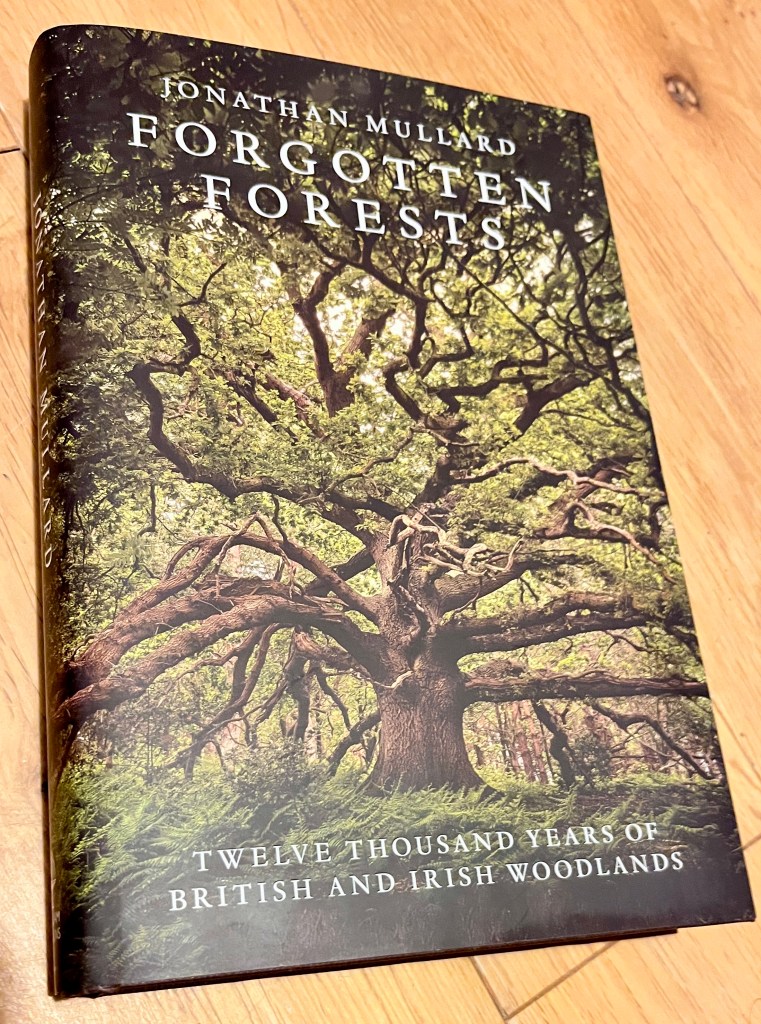
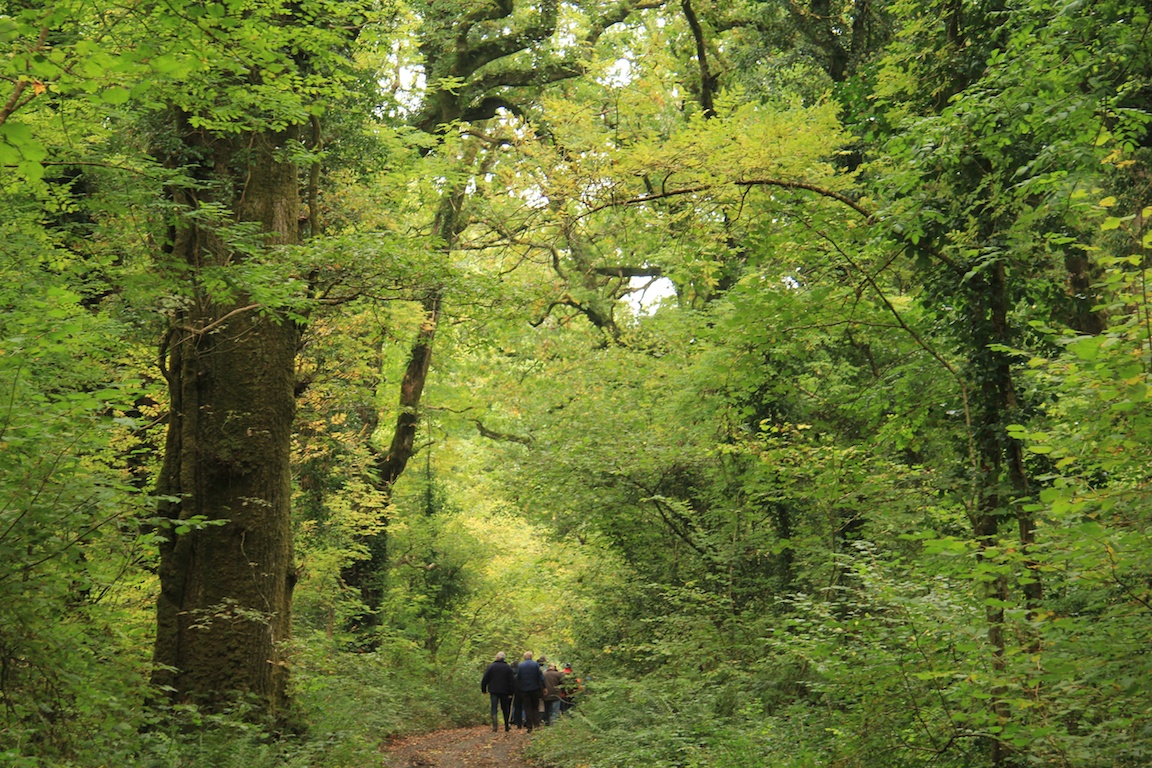
I wish I’d had a copy of Jonathan Mullard’s new book Forgotten Forests: Twelve Thousand Years of British and Irish Woodlands (William Collins, 2025) to give to Derrick. Just last month, Jonathan kindly sent it to me—it even includes one of my photos from this blog: those stunning Sessile Oaks in Co. Clare I encountered on a ProSilva forest day. That moment opened my eyes to the extraordinary beauty of our native trees.
While this book doesn’t mention beavers, Jonathan’s book would have been perfect for anyone curious about the long ecological history of Ireland and Britain’s forests. He weaves science, archaeology, and cultural stories into a sweeping tale of how forests have been shaped—and often forgotten—since the last Ice Age. From the impact of Neolithic farmers to centuries of clearing for farming, ships, and fuel, Forgotten Forests shows how humans and nature have together shaped these landscapes.
What stood out to me was how Mullard contrasts the Irish and British woodland experience. In Ireland, early deforestation, grazing, and a wetter climate led to vast upland bogs that halted forest regeneration—unlike in Britain, where more varied flora and fauna, plus continental species, allowed woodlands to persist longer. These differences matter. They show how natural and cultural forces combined to shape the landscapes we now walk through—and often take for granted.
In his final chapter, Mullard highlights ancient trees—some over a thousand years old—as living links to our woodland past. He calls them witnesses and reservoirs of biodiversity, and importantly, we need to remember they have intrinsic value to exist as part of Earth’s incredible evolutionary heritage. Their continued survival, he argues, depends on how much we value them today and include them in forest habitats, not as curiosities, but as essential to ecological integrity for a thriving world.
Thank you, Jonathan, for this remarkable book about our remarkable tree ancestors and relating how agricultural practices and changing climates can radically alter forests. We have so much to learn to re-establish our forest communities.
__________________________
Jonathan Mullard is a professional ecologist and biologist specialising in the management of protected areas. He is Britain’s first senior officer for Areas of Outstanding Natural Beauty and a Fellow of the Royal Society of Biology. Mullard is also a natural history author and wildlife photographer, known for blending scientific research with historical insight. His recent book, Forgotten Forests: Twelve Thousand Years of British and Irish Woodlands, retraces the ecological and human history of woodlands across Britain and Ireland

